
Versatile with a smooth finish
A versatile material with a smooth finish for decorations, gifts and prototypes. Recommended for indoor use.
Turn your idea into an object you can hold. We can start with a sample part, an image or a description. For an electronics enclosure, we design around the components it needs to hold. From gifts to prototypes and cases, we handle CAD design and FDM printing.
We start with how the part will be used. Measurements, model design and printing are handled together.

We agree on the important dimensions and fits before designing. A parametric CAD model lets us carry changes through consistently.

We can show the proposed model in an interactive web preview. We review the shape and details together, then use a test print where a physical fit check is needed.
We handle the CAD model, print preparation and finished part. A person reviews your requirements and files before we prepare a quote.
We use FDM printing, which builds parts from melted filament. We choose from PLA, PETG, TPU, ABS and ASA to suit the intended use and shape.

Personalised decorations, branded objects or accessories based on your idea. We agree on the shape, size and appearance, then create the model.
Get a first physical part to try out your idea. We can update the model based on what you learn and produce an agreed small batch.
We design housings, PCB cases and device mounts around your mounting points and connectors. We can also help if your project needs custom electronics development.
Custom electronics and IoT
We build parametric 3D models from calliper measurements, drawings or photos supported by dimensions. We discuss the areas where fit is critical.
We supply the CAD models we design in both STEP and STL formats. STEP supports further CAD work; STL can be used for print preparation.
Already have a model? We review it for FDM printing, then set the orientation, required supports and slicing parameters.
What we need depends on what you want to make. Here is where to start.

If you have a sample, such as the part to replace or fit against, send it by post. We will agree on shipping arrangements with you first. We measure the sample to get the dimensions right.

A description or an image is enough to get started. An AI-generated image works too. We just need to understand what you have in mind.
Send us the actual electronics or other components that will go inside. We design the enclosure around them, following your idea. If you need us to develop the electronics too, that falls under our hardware development service.
Unsure what to send? Tell us what you want to make, and we will ask for any details we need.
We first establish what the object needs to do and what it must fit. We turn the dimensions into a CAD model that we can also show in 3D. A test print helps us refine the design before making the agreed parts.
The CAD model follows the supplied dimensions. Material and print settings also affect the fit of the physical part, so we agree on clearances and test prints for critical areas. FDM parts may have visible layer lines.
Requirements and measurements Send a sample part, an image or description, or the electronics the case needs to hold. Tell us how you will use the object and how many you need. We review what you send and work through the details with you. CAD model and 3D preview We design the shape, openings and mounting points. An interactive model lets us review the details together. Test print and refinement Where fit matters, we check critical areas with an agreed test print. We update the model if changes are needed. Finished parts and files We print the parts from the agreed model. For our own CAD designs, we also hand over the STEP and STL files. An existing product may already do the job. Custom printing makes sense when dimensions, shape or mounting details need to fit your particular setup.
Choose from an existing range. This is a practical option when the available size, layout and function meet your needs.
Pros
Cons
We design the part for its agreed use. Openings, mounts and dimensions can be tailored to your requirements.
Pros
Cons
Printing is not the right answer for every project. We review the intended use and tell you if an existing product would be a better fit.
From rigid decorations to flexible protective cases, we choose filament to suit how the object will be used.
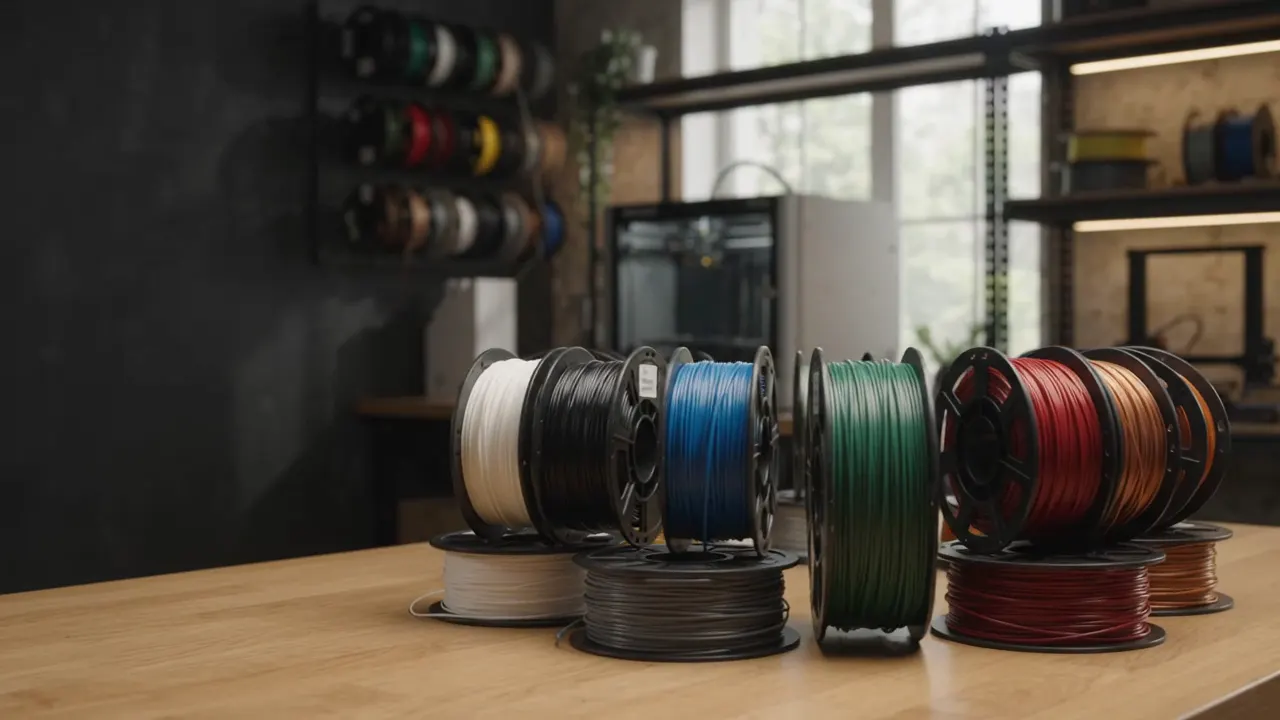
A versatile material with a smooth finish for decorations, gifts and prototypes. Recommended for indoor use.
Tougher and more resistant to water and heat than PLA. A good choice for functional parts, mounts and cases.
A flexible, rubber-like material for seals, feet and protective cases. It can also absorb impacts.
A tough material with greater heat resistance for objects used in warmer environments and mechanical parts.
Similar to ABS, with UV and weather resistance. Recommended for outdoor parts.
We print up to approximately 25 × 25 × 25 cm in one piece; larger objects are made in sections that fit together. An automatic filament changer allows multiple colours within one object, except with TPU. If you are unsure, we help you choose a material.
Tell us what the object is for and how many you need. For a part that needs to fit, send your existing sample by post after we agree on shipping. For a creative object, a description or image is enough, including an AI-generated image. For an enclosure, send the electronics or other components so we can design around them.
We take measurements from the sample part, with postal arrangements agreed beforehand. For a case, we need the actual electronics or other contents to position openings and mounting points around them. For creative objects, an image or description conveys the idea; an AI-generated image is fine too. We discuss the required dimensions separately.
We use PLA, PETG, TPU, ABS and ASA with FDM printing; see the Materials section for examples of their uses. We print up to approximately 25 × 25 × 25 cm in one piece, with larger objects made in sections that fit together. We help you choose a material for your intended use.
We supply our own CAD designs in STEP and STL formats. An STL you provide does not automatically become an editable STEP model; any redesign is discussed separately.
You can contact us about a single custom part or a small batch. After reviewing the shape, material and intended use, we agree on any test print and the quantity to produce.
Open the requirements form in the “How shall we start?” section below. Describe the task and quantity. A person reviews your request, we clarify any missing details, and then prepare your quote.
A few details and a short description are all we need. We’ll get back to you with the details.
We will be in touch soon at the email address you provided.
A few quick questions for a more accurate quote
Thanks, we've received your request.
Built on proven technology